Why Long-Term Investing Beats Short-Term Trading (And How It Builds Real Wealth)
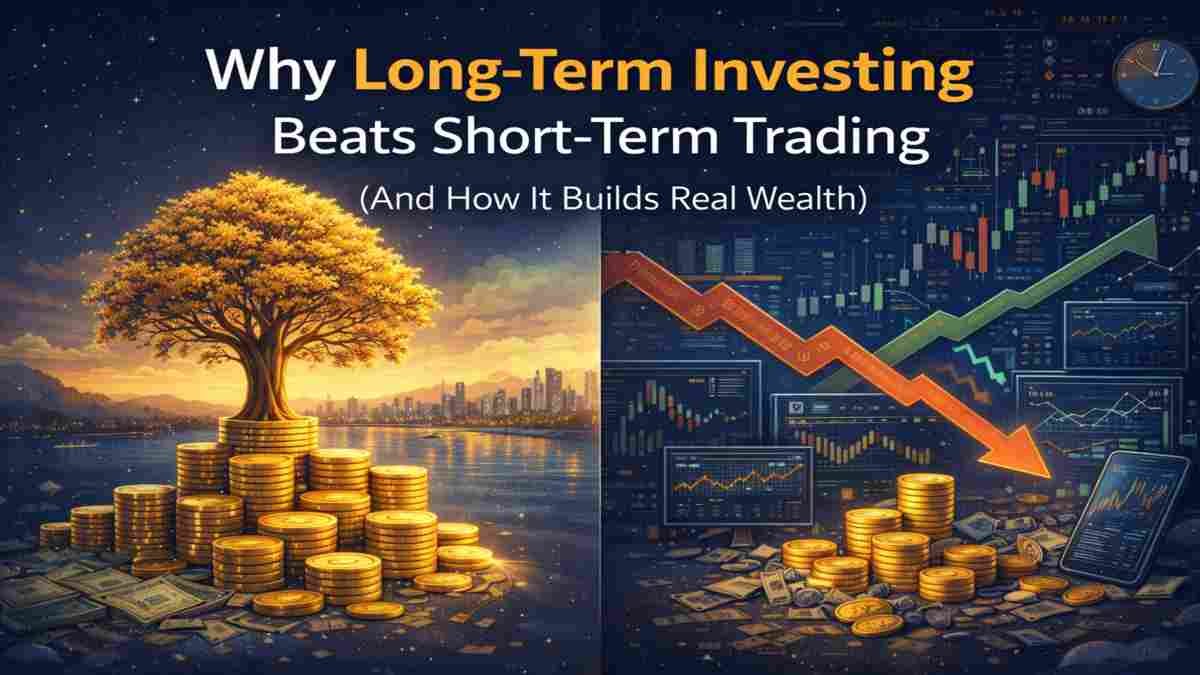
In today’s fast-moving financial world, it is easy to believe that successful investing means constantly buying and selling stocks, chasing market trends, or trying to predict the next big move.
Social media, financial news, and trading apps often reinforce this idea. They highlight quick profits, day trading success stories, and dramatic market swings.
But when we look at decades of market history, a different pattern becomes clear.
The investors who consistently build wealth are not usually the ones trading every day. More often, they are the ones who stay invested for long periods of time, allow their investments to grow, and take advantage of the power of compounding.
This is the philosophy behind long-term investing.
What Is Long-Term Investing?
Long-term investing is the strategy of purchasing assets—such as stocks, ETFs, or funds—and holding them for many years, often decades.
Instead of focusing on short-term price movements, long-term investors focus on:
- the strength of a company’s business model
- long-term earnings growth
- sustainable dividends
- economic trends that may play out over many years
The idea is simple: if you own strong businesses and give them time to grow, your investment can grow along with them.
The Power of Compounding
One of the most powerful forces in long-term investing is compounding.
Compounding happens when investment returns begin generating their own returns. Over time, this effect can become dramatic.
For example, imagine investing $10,000 and earning an average annual return of 8%.
After 10 years, that investment becomes roughly $21,600.
After 20 years, it grows to about $46,600.
After 30 years, it becomes more than $100,000.
Notice something important: the biggest growth happens later, not at the beginning. This is why patience is one of the most valuable skills an investor can develop.
Long-term investors are not just buying assets. They are giving compounding the time it needs to work.
Why Short-Term Trading Is So Difficult
Short-term trading can look attractive, but it is extremely difficult to do consistently.
Even professional traders struggle to outperform the broader market over long periods.
There are several reasons for this.
1. Market timing is extremely hard
Trying to predict short-term price movements requires forecasting the behavior of millions of investors, economic news, interest rates, earnings announcements, and global events.
Even experienced professionals frequently get it wrong.
2. Higher costs and taxes
Frequent trading can generate:
- transaction costs
- capital gains taxes
- emotional decision-making
Over time, these factors can significantly reduce investment returns.
Long-term investors typically trade much less, which can improve after-tax results.
3. Emotional investing
Short-term trading often amplifies emotional behavior.
When markets fall, investors panic.
When markets rise quickly, investors chase momentum.
These emotional reactions can lead to buying high and selling low—the exact opposite of what successful investing requires.
Advantages of Long-Term Investing
Long-term investing has several structural advantages that make it appealing to many investors.
Simplicity
Instead of constantly monitoring markets, long-term investors can focus on building a strong portfolio and reviewing it periodically.
Lower stress
When you focus on decades instead of days, short-term volatility becomes less important.
Market fluctuations still occur, but they are part of the process.
Dividend income
Long-term investors often benefit from companies that grow their dividends over time.
These dividends can eventually become a meaningful source of passive income.
Participation in economic growth
Over long periods, businesses grow, innovation occurs, and economies expand. Long-term investors benefit from that growth.
Potential Risks of Long-Term Investing
Even though long-term investing has many advantages, it is not without risks.
Market volatility
Stock markets can experience large declines. Even long-term investors must be able to tolerate temporary losses.
Company-specific risks
Not every company survives long-term. Some industries decline, technologies change, and business models fail.
This is why diversification is often important.
Inflation and interest rates
Economic conditions can change over time, which may impact investment returns and valuations.
Long-term investors need to stay informed and periodically review their portfolios.
Building a Long-Term Investment Mindset
Successful long-term investors often focus on a few core principles.
Consistency
Invest regularly instead of trying to perfectly time the market.
Diversification
Spread investments across multiple companies, sectors, and asset classes.
Patience
Allow time for businesses and investments to grow.
Continuous learning
Markets evolve, and investors benefit from continually improving their knowledge.
The Bigger Picture
Long-term investing is not about getting rich overnight.
Instead, it is about steadily building wealth through disciplined decisions, patience, and the ability to stay invested through both good times and difficult periods.
For many investors, this approach aligns well with goals such as:
- financial independence
- passive income
- retirement planning
- long-term financial stability
By focusing on quality investments and allowing time for compounding to work, investors may improve their chances of achieving those goals.
Final Disclaimer
This article reflects personal perspectives and is provided for educational and informational purposes only.
It does not constitute financial advice, investment recommendations, or an offer to buy or sell any financial asset.
Every investor has different financial circumstances, goals, risk tolerance, and time horizons. Because of this, investment decisions should always be made carefully and based on your own research and understanding.
At the end of the day, each individual is responsible for their own investment decisions and financial education. Consider conducting your own due diligence and consulting with a qualified financial professional before making any investment decisions.
Share this content:



Post Comment